Quick Enquiry

CT Scan Machine How It Works and Where It Is Used
Healthcare nowadays relies on fast, reliable and accurate diagnostic tools. The CT Scan Machine has one of the biggest contributions to medical imaging, which has revolutionized the process through which medical practitioners identify, examine, and cure numerous medical cases. Since it is used in emergency care due to trauma, as well as in specific internal organ examination, this technology is essential to the modern hospital and diagnostics facility.
As the need to be diagnosed accurately increases, healthcare professionals need imaging systems that are fast, clear and safe. ACT Scan Machine meets these needs through giving high-resolution cross sectional images of the human body in just a few seconds. Advanced imaging solutions are currently provided by CMED Radiology Private Limited to satisfy the emerging requirements of the current radiology departments.
What is a CT Scan Machine?
A CT Scan Machine (Computed Tomography system) is a medical imaging system, which is based on the use of X-rays and computer advanced processing in developing detailed cross-sectional body images. Contrary to the normal X-ray imaging, which yields flat images, the CT technology takes more than one image at varying angles and reassembles the images to form clear and layered images.
Such images enable physicians to scrutinize bones, blood vessels, soft tissues and organs with outstanding precision. Due to this ability, CT technology is a common method of diagnosis, treatment planning, or follow-up of numerous medical diseases.
It has made CT Scan Machine an indispensable aspect of contemporary diagnostic medicine through the fact that it is able to show internal details without invasiveness.
Where is a CT Scan Machine Used?
A CT Scan machine is applicable in various fields in medicine due to its flexibility and accuracy. There are some most popular locations:
Hospitals and Emergency Departments
Speed is an asset when dealing with emergencies. Imaging CT assists physicians in identifying internal bleeding, fractures, or organ damage with ease and in a short time, particularly in trauma cases.
Diagnostic Imaging Centers
Free-standing diagnostic centers use CT systems to conduct routine and special scans and will provide proper diagnosis to the patients referred to the facility by physicians.
Oncology Departments
CT imaging is very important to identify tumours, diagnosis of cancer, and to monitor cancer treatment.
Neurology and Brain Imaging
A CT Scan Machine is a quick and effective option of brain imaging in the case of head-injuries, strokes, or neurological problems.
Cardiology
The sophisticated CT technology is used to measure the heart conditions, coronary arteries, and vascular structures.
How Does a CT Scan Machine Work?
Exploring the functionality of a CT Scan Machine enables one to value its accuracy and dependability.
Patient Positioning
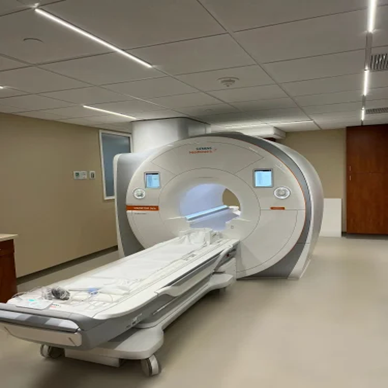
The patient is placed on a motorized table which passes slowly into a circular hole known as the gantry.
X-Ray Emission
The gantry contains an X-ray tube that rotates around the patient emitting controlled beams at varying angles.
Data Collection
The signals are reflected through the body and detected by detectors located in the opposite position of the X-ray source.
Image Reconstruction
The collected data are processed by a powerful computer and restored back to elaborate cross-sectional images.
Clinical Analysis
Radiologists interpret these images to determine abnormalities, injuries or diseases.
It is through this process that a CT Scan Machine can generate very accurate images within a very short time of just a few minutes.
Key Benefits of a CT Scan Machine
Increasing popularity of CT imaging is informed by a number of strengths:
High Diagnostic Accuracy
CT scans provide exceptional image clarity, enabling early detection of diseases.
Fast Imaging Speed
Scans are completed quickly, which is critical for emergency and critical care.
Non-Invasive Procedure
The technology allows internal visualization without surgery.
Wide Clinical Applications
From bones to soft tissues, CT imaging covers a broad diagnostic spectrum.
Advanced 3D Imaging
Modern CT systems offer 3D and multiplanar reconstructions for better clinical insights.
Types of CT Scan Machines
Various CT settings are needed in various healthcare facilities. The most common are the ones listed below:
Type | Description | Ideal Usage |
| Single-Slice CT | Basic imaging with one detector row | Small clinics |
| Multi-Slice CT | Multiple detector rows for faster scans | Hospitals |
| High-Slice CT | Advanced imaging with high resolution | Trauma & oncology |
| Portable CT | Compact and mobile systems | ICUs & emergency rooms |
| Cardiac CT | Specialized for heart imaging | Cardiology centers |
The type of CT Scan Machine meets a certain clinical and operating requirement.
Important Features to Consider
When choosing a CT Scan Machine there are some features which must be taken into consideration:
Image Resolution
Accurate diagnosis and improved clinical outcomes are achieved by use of the high-resolution imaging.
Scan Speed
The accelerated rotation and acquisition decreases patient discomfort and motion artefacts.
Radiation Dose Control
The current CT machines have dose-reduction mechanisms to prevent patients.
Software Capabilities
High-quality reconstruction algorithms and AI-guided tools enhance efficiency in the workflow.
System Reliability
Long term performance requires durable parts and stability in performance.
In CMED Radiology Private Limited, the selection of machines is based on their performance, safety, and reliability.
Medical uses of CT Scan Technology
CT Scan Machine can be used to diagnose and monitor a vast variety of ailments such as:
- Head injuries and brain disorders
- Chest infections and lung diseases
- Abdominal pain and organ evaluation
- Bone fractures and spinal conditions
- Cancer detection and staging
- Vascular abnormalities
It is essential in any field of medicine due to its capability to deliver accurate imaging.
Safety and Radiation Considerations
Although CT imaging requires the use of radiation, the systems of today are constructed in the light of stringent safety measures. The dose optimization technologies are advanced, which guarantees the patients the lowest radiation without affecting the image quality.
Guidelines on the safe use of a CT Scan Machine are standardized and as such, it has been a reliable diagnostic tool across the globe.
Why Quality Matters in CT Imaging
The direct effect of the investment on patient trust and diagnostic accuracy is in a high-quality CT Scan Machine. Lack of good imaging may result in misdiagnosis, and late treatment and high costs.
High quality imaging solutions like CMED Radiology Private Limited will enable healthcare facilities to ensure high clinical standards in addition to enhancing patient outcomes.
Future of CT Scan Technology
The CT imaging keeps improving as there are new developments like:
- AI-based image reconstruction
- Ultra-low radiation dose technology
- Faster scan times
- Enhanced 3D and 4D imaging
The future of diagnostic radiology is taking the form of these innovations that are transforming CT systems to be smarter, safer and more efficient.
Conclusion
The CT Scan Machine is considered as one of the most essential diagnostic instruments in the modern healthcare provision that is fast, accurate and versatile in their medical use. Its role cannot be ignored in emergency care, chronic disease management, etc.
The selection of the appropriate imaging solution leads to enhanced patient outcomes, operational efficiency and reliability in the long run. Trusted solutions of CMED Radiology Private Limited will help the providers of healthcare to be able to address the current diagnostic issues with accuracy and confidence.
Frequently Asked Questions (FAQ)
What is the main purpose of a CT Scan Machine?
A CT Scan Machine is used to create detailed internal images of the body for accurate diagnosis and treatment planning.
Is CT scanning safe?
Yes, modern CT systems use optimized radiation doses and follow strict safety protocols.
How long does a CT scan take?
Most scans are completed within a few minutes, depending on the type of examination.
Can CT scans detect cancer?
CT imaging is widely used to detect, stage, and monitor cancer effectively.
Who should operate a CT Scan Machine?
Only trained radiographers and radiologists should operate and interpret CT imaging systems.